
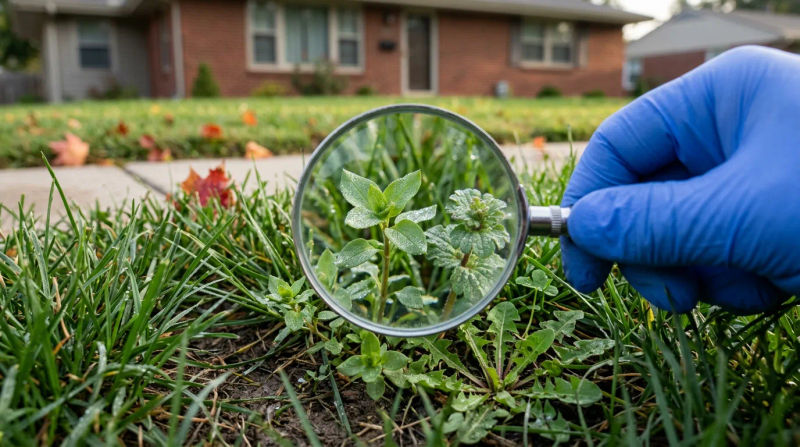
You’ve spent all summer mowing, watering, and enjoying your lawn. But as the September air starts to cool here in Independence, you might be noticing some unwelcome guests popping up in your turf. That lush green carpet is suddenly dotted with low-growing mats of tiny white flowers or the familiar sunny-yellow heads of dandelions. This isn't a sign that your summer efforts were wasted; it's a signal that a new season of lawn care has begun, and a new group of weeds is taking advantage of the changing conditions.
As an exterior maintenance specialist with over a decade of experience in the Kansas City area, I've seen this cycle play out every year. The shift to cooler weather triggers a flush of growth for specific types of weeds that thrive when warm-season grasses start to slow down. Identifying these invaders early is the key to effective control before the first frost arrives.
Common Signs and Symptoms
Before you can treat a problem, you have to correctly identify it. Many fall lawn weeds look similar at a glance, but understanding their distinct characteristics is crucial for choosing the right control method. Here are the most common culprits our technicians find in Independence-area lawns each autumn.
- Dandelion: This is the weed everyone knows. It’s identified by its bright yellow flower that turns into a white puffball of seeds. What you might not see is its long, thick taproot, which makes it incredibly difficult to remove by hand. If you leave even a small piece of the root behind, the plant will grow back. Effective dandelion control in fall is all about timing. In autumn, the plant is sending energy downward to store in its roots for winter, meaning it will readily absorb herbicide and carry it down to the root, killing the entire plant.
- Chickweed: If you see dense, low-growing patches that seem to choke out your grass, you might be dealing with common chickweed. Look closely and you'll see small, delicate leaves and tiny, star-shaped white flowers. The problem with chickweed in lawns Independence MO is that it spreads rapidly, creating a thick mat that smothers turf. It thrives in cool, moist, and shady areas, which are common in established neighborhoods with mature trees.
- White Clover: Recognizable by its three-leaflet leaves (and the occasional lucky four-leaflet one), white clover produces small, whitish-pink spherical flowers. It often indicates a nitrogen deficiency in your soil. Because clover can produce its own nitrogen, it has a major advantage over grass in nutrient-poor conditions. Many homeowners ask us how to kill clover without harming grass, and the answer involves a combination of targeted herbicide applications and improving soil fertility to help the turf outcompete it.
- Henbit and Purple Deadnettle: These two are often confused. Both are members of the mint family, featuring square stems and small, purplish flowers. They are winter annuals that germinate in the fall, grow slowly through winter, and flower in the spring. Henbit has leaves that appear to clasp the stem, while purple deadnettle has more triangular leaves on small stalks (petioles), which are often purplish at the top of the plant. Both can quickly take over thin areas of a lawn.
What Causes This Problem
Seeing weeds isn't just bad luck; it’s a symptom of underlying issues in your lawn's health and environment. Understanding the root causes can help you build a more resilient, weed-resistant lawn for the future.
First and foremost, the cooling weather is the primary trigger. Cool-season broadleaf weeds are programmed to germinate in the fall when the soil temperature drops. They face less competition from turfgrass, which is beginning to slow its growth in preparation for winter dormancy.
Here in Independence, our soil composition plays a huge role. Many of the beautiful, established neighborhoods, with their classic 1950s ranch homes, also feature mature trees and decades-old lawns. Over time, this often leads to compacted clay soil. This heavy soil restricts the flow of air, water, and nutrients to grass roots, stressing the turf and making it weak. Weeds like dandelions, with their powerful taproots, can penetrate compacted soil more easily than desirable grass species.
Thin turf and bare spots are open invitations for weeds. Whether these spots were caused by summer drought, foot traffic, disease, or insect damage, nature will quickly fill them with something - and that something is usually weeds. A dense, healthy stand of turf is the best natural weed defense.
Finally, your maintenance practices matter. Mowing the grass too short scalps the lawn, reducing its ability to photosynthesize and store energy. This weakens the turf and allows more sunlight to reach the soil surface, which can encourage weed seeds to germinate. Similarly, shallow, frequent watering encourages shallow root growth in grass, making it less resilient, while many weeds are better adapted to these conditions.
When to Call a Professional
Deciding whether to tackle fall lawn weeds yourself or to bring in expert help often comes down to the scale of the problem and your desired outcome.
A DIY approach can be effective for a very small number of weeds. If you have just a few dandelions scattered across the yard, hand-pulling them after a good rain (when the soil is soft) can work, provided you get the entire taproot. For slightly larger but still manageable issues, selective liquid herbicides from a garden center can be an option. However, the risk is always there: using the wrong product, applying it at the wrong rate, or spraying on a windy day can lead to damaged grass or ineffective results.
We recommend contacting a qualified professional when you encounter the following situations:
- Widespread Infestation: If more than a quarter of your lawn is covered in weeds, a DIY spot-treatment approach is inefficient and unlikely to succeed. Our technicians use calibrated equipment to ensure even, effective coverage over large areas.
- Identification is Difficult: You're not sure if you have chickweed, henbit, or something else entirely. Proper identification is critical, as different weeds respond to different control products. An experienced professional can quickly diagnose the issue and select the most effective treatment.
- You Want a Long-Term Solution: Simply spraying weeds is a temporary fix. A professional service will offer a comprehensive program that not only addresses existing weeds but also improves the underlying conditions. This includes proper fertilization to address issues that favor clover, and services like core aeration to relieve the compacted clay soil common in this area.
- You Need Guaranteed Results: When you're trying to figure out how to kill clover without harming grass, it can be a frustrating process of trial and error. Our crews are trained in standardized processes, using professional-grade products that are highly effective and safe for your turf when applied correctly.
Conclusion
As the days get shorter and cooler, don't let your guard down when it comes to lawn care. Autumn presents a unique and critical opportunity to control invasive plants. By correctly identifying common invaders like dandelions, chickweed, and clover, you can understand that their presence points to specific conditions in your yard, from compacted soil to low fertility.
More importantly, taking action now is far more effective than waiting until spring. As these plants prepare for winter, they are actively transporting resources from their leaves to their roots. A fall herbicide application takes advantage of this natural process, ensuring the product is delivered directly to the root for a complete kill. Acting early prevents these weeds from establishing themselves over the winter and emerging as a much bigger problem next year.
If you notice any of these signs of fall lawn weeds, contact a local Lawn Care professional for an inspection. An expert can provide a clear diagnosis and lay out a plan to restore your lawn's health and beauty.