

You step outside to enjoy a crisp, early autumn morning in Kansas City. The summer heat is finally breaking, but as you look across your yard, you notice them: unsightly brown or thin spots that have appeared seemingly overnight. After a long summer of mowing and maintenance, seeing a patchy lawn can be disheartening. But as a specialist with over a decade of experience maintaining properties in this area, I can tell you that September is a critical diagnostic month. The combination of warm days, cool nights, and heavy morning dew creates a unique environment that can expose underlying issues. Understanding what's causing these blemishes is the first step toward a successful fall recovery and a lush lawn next spring.
Common Signs and Symptoms
Before we can diagnose the problem, we need to carefully observe the symptoms. A patchy lawn isn't a single issue; it's a symptom that can point to many different root causes. When our technicians perform a lawn inspection, they are trained to look for specific visual cues. You can do the same.
Take a walk around your yard and look closely at the affected areas. Do you see:
- Circular, Well-Defined Patches: Are the patches roughly circular, ranging from a few inches to several feet in diameter? Note the color - are they yellow, tan, or brown? Sometimes, you might see a darker ring around the edge, which can be a key indicator.
- Irregular, Spreading Areas: Instead of neat circles, perhaps you see large, amorphous sections of turf that look weak, thin, or discolored. These often appear in areas that receive a lot of sun or foot traffic.
- Thinning Turf: In some spots, the grass may not be dead, but it’s noticeably thinner than the rest of the lawn, allowing you to see the soil beneath. This is common in shady areas or places with poor soil.
- Lesions or Coatings on Grass Blades: Get down on your hands and knees. Examine individual grass blades in the morning when dew is present. Do you see small spots, lesions, or a cotton-like or powdery substance? These are classic cool-season lawn fungus symptoms.
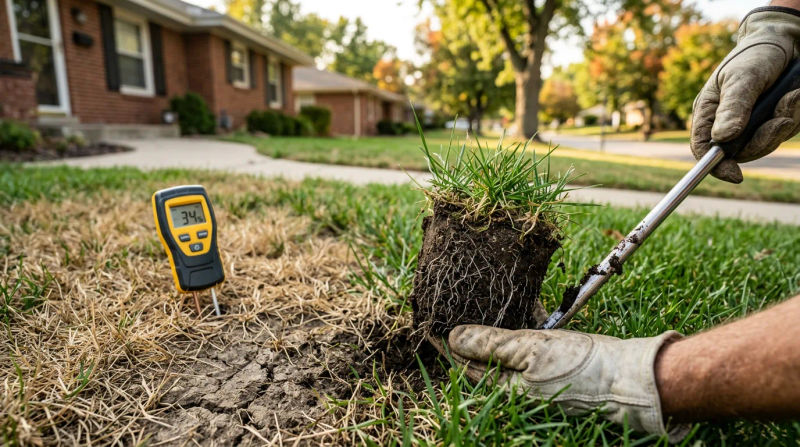
- Easy-to-Lift Turf: Gently tug on a section of brown grass. If it lifts up easily like a piece of carpet with no roots attached, you have a strong clue about what’s happening beneath the surface.
Careful observation is the foundation of an accurate diagnosis. The specific appearance, location, and behavior of the patches will help narrow down the list of potential culprits.
What Causes This Problem
Once you’ve identified the symptoms, you can begin to connect them to the most common patchy lawn causes we see across the Kansas City area each fall. Here are seven of the most frequent offenders.
- Lawn Fungus: The weather in September is prime time for fungal diseases like Brown Patch and Dollar Spot. The cycle of warm, humid days followed by cool nights with heavy dew allows these pathogens to thrive on cool-season grasses like fescue and bluegrass. Brown Patch often appears as circular patches of brown grass, sometimes with a grayish “smoke ring” around the perimeter in the early morning. Dollar Spot presents as smaller, silver-dollar-sized circles that can merge into larger, irregular blotches.
- Lingering Drought Stress: Even with cooler temperatures, the effects of a hot, dry August can still be evident. Areas of your lawn with shallow root systems, particularly on slopes, along driveways, or over buried utility lines, are the first to show stress. The turf in these spots turns a bluish-gray color before going dormant and turning brown.
- Dog Urine Spots: This is one of the most common questions we get. The key difference between dog urine spots vs lawn disease is often the “fertilizer ring.” Dog urine is high in nitrogen, which burns the grass in the center of the spot but often causes a ring of dark green, rapid growth around the edge. Fungal diseases typically don't create this halo effect. The spots are usually small, circular, and concentrated in a pet’s favorite areas.
- White Grub Damage: In late summer and early fall, white grubs are actively feeding on the root systems of your turf. The damage they cause - large, irregular patches of brown grass - often doesn’t become obvious until September. The tell-tale sign is turf that you can roll back like a rug because the roots have been completely severed. If you suspect grubs, a trained professional can take a sample to confirm their presence and population density.
- Soil Compaction: Over time, especially in high-traffic areas, the soil becomes compacted. This is particularly relevant for homes in established neighborhoods like St. Joseph, where many properties date back to the 1950s. The heavy clay soil, combined with decades of foot traffic and mowing, can become as hard as concrete. Compacted soil restricts the flow of water, air, and nutrients to the roots, leading to thin, weak turf that struggles to survive.
- Improper Mowing or Watering: Cutting your cool-season grass too short during the summer heat stresses the plant, depletes its energy reserves, and makes it vulnerable to disease and pests. Likewise, shallow, frequent watering encourages a weak, shallow root system. Our teams always recommend deep, infrequent watering to train roots to grow deeper, making the turf more resilient to drought.
- Excessive Thatch: Thatch is the layer of dead stems and roots that accumulates between the soil surface and the living grass blades. A thin layer is normal and healthy, but when it exceeds half an inch, it acts like a barrier, preventing water and fertilizer from reaching the soil. It also creates a perfect, moist environment for fungal diseases and insect pests, contributing to many September brown patches in Kansas City.
When to Call a Professional
Some minor lawn issues can be handled with a DIY approach. If you have one or two isolated dog spots or a small patch where you spilled gasoline, you can likely rake out the dead material, add some topsoil, and reseed the area yourself.
However, you should consider calling for a professional diagnosis if you encounter any of the following:
- The Patches are Spreading: If the problem areas are growing in size or new spots are appearing, it’s a sign of an active disease or pest infestation that needs to be correctly identified and treated quickly.
- The Cause is Unclear: Do you see symptoms that could be either fungus or grub damage? The treatments are completely different. Applying the wrong product is a waste of time and money and won't solve the problem. An experienced technician has seen thousands of lawns and can accurately differentiate between these complex issues.
- The Problem is Widespread: If more than 20-30% of your lawn is affected, a comprehensive, systematic approach is needed. This may involve professional-grade treatments, core aeration, and overseeding - tasks that are difficult to perform effectively without specialized equipment and knowledge.
- You Want a Long-Term Solution: A qualified professional won't just treat the symptom; they will identify the root cause. Our process involves evaluating not just the turf itself, but also soil composition, thatch depth, and mowing and watering habits to create a plan for long-term health, not just a quick fix.
Conclusion
Seeing your lawn develop patches in September can be frustrating, but it’s also an opportunity. Early fall provides the perfect window to diagnose the underlying causes - whether it's a fungus, grubs, soil compaction, or something else - and take corrective action. The soil is still warm enough for seed to germinate, and new grass will have time to establish before the first hard frost. Waiting until spring will only allow the problem to worsen and will make recovery more difficult.
By carefully observing the symptoms and understanding the common culprits we see in the Kansas City area, you can take the first step toward reclaiming your lawn. Don't let a few brown patches ruin your autumn. Act now to ensure a healthier, more resilient turf for next year.
If you notice any of these signs and are unsure of the cause, contact a local lawn care professional for an inspection.