
You've spent the summer mowing, watering, and enjoying your yard. But as the cooler September air settles over Pleasant Valley, you might notice something is off. Your lawn, which should be thriving in the milder temperatures, looks a bit tired. It feels strangely spongy underfoot, and after a rain shower, water seems to run off into the street instead of soaking in. If this sounds familiar, you're not just imagining things. Your lawn could be suffocating under a hidden layer of thatch.
As a specialist who has worked on properties across the Kansas City area for more than a decade, I’ve seen this exact scenario play out countless times. A thick thatch layer acts like a barrier, preventing water, air, and nutrients from reaching the soil and grass roots. Ignoring it can lead to a weak, unhealthy lawn that’s susceptible to disease and pests. Understanding the warning signs is the first step toward restoring your turf's health.
Common Signs and Symptoms
Identifying thatch buildup early can save you from more significant lawn problems down the road. Our trained technicians are conditioned to spot these issues during routine service, but you can easily check for them yourself. Here are the most common dethatching signs Pleasant Valley homeowners should look for:
- A Spongy, Bouncy Feel: When you walk across your lawn, does it feel like you're walking on a thick, soft carpet? A healthy lawn should feel firm underfoot. A spongy or bouncy sensation is a classic indicator of a dense thatch layer just below the surface.
- Poor Water Penetration: After watering your lawn or a steady rain, do you see water pooling on the surface or running off quickly? Thatch is hydrophobic, meaning it repels water. Instead of hydrating the soil and roots, water gets trapped in the thatch or runs off, wasting a precious resource and leaving your grass thirsty.
- Thinning, Patchy Turf: If your lawn looks thin or has weak, bare patches despite regular fertilization and watering, thatch is a likely culprit. By blocking essential nutrients and water, it essentially starves your grass, causing it to thin out and lose its vigor.
- Increased Disease and Insect Activity: A thick, moist thatch layer is the perfect breeding ground for fungal diseases like brown patch and dollar spot. It also provides a safe harbor for lawn-damaging insects like chinch bugs. If you're constantly battling these issues, an underlying thatch problem may be to blame.
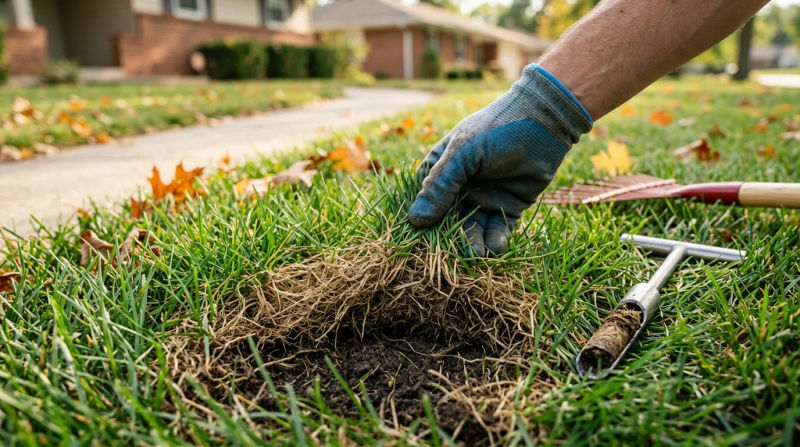
- Shallow Root Growth: Healthy grass has deep roots that anchor it firmly in the soil. Thatch encourages roots to grow within the thatch layer itself, where moisture and nutrients are inconsistent. You can check this by digging up a small, 3-inch-deep plug of turf. If the roots are shallow and tangled in the matted layer above the soil, you have a thatch issue.
- Dull or Off-Color Grass: A lawn that isn't getting the air, water, and nutrients it needs will show it. If your grass has a persistent dull green, yellow, or brown tint even when it’s not dormant, the thatch buildup lawn Kansas City is experiencing is likely choking the life out of it.
- A Visible Layer Over ½ Inch: The most definitive test is to look. Use a trowel or a sharp knife to cut out a small wedge of your lawn. Look at the cross-section. You’ll see the green grass on top and the dark soil on the bottom. In between is a layer of brownish, spongy, organic matter - that's the thatch. A layer up to ½ inch is normal and can even be beneficial. Anything thicker indicates a need for lawn dethatching.
What Causes This Problem
Thatch is a natural part of a lawn's life cycle. It’s a tightly intermingled layer of living and dead stems, leaves, and roots that accumulates between the actively growing grass and the soil surface. A small amount is healthy, but when it builds up faster than it can decompose, it becomes a problem.
Several factors contribute to excessive thatch buildup, many of which are common in our area:
- Aggressive Grass Types: Cool-season grasses popular in the Kansas City region, such as Kentucky bluegrass and some fescue varieties, are vigorous growers. They naturally produce organic matter at a rate that can quickly overwhelm the soil's ability to break it down.
- Over-Fertilizing: Applying too much nitrogen fertilizer stimulates rapid, lush top-growth. This growth eventually dies and contributes directly to the thatch layer, accelerating its accumulation.
- Improper Watering: Light, frequent watering encourages shallow root systems that grow in the thatch layer rather than deep into the soil. This not only weakens the turf but also adds more organic material to the problematic layer.
- Soil Compaction: Many homes in Pleasant Valley, particularly the classic 1950s ranch-style houses, sit on lots that have seen decades of foot traffic, mowing, and weather. This can lead to compacted soil. Compacted soil has less oxygen, which is vital for the soil microbes that naturally decompose thatch. Without these beneficial microorganisms working effectively, thatch builds up quickly.
- Pesticide Overuse: While necessary at times, certain pesticides can harm the earthworm and microbial populations in your soil. These organisms are your lawn's natural dethatching crew, and reducing their numbers slows down the decomposition process significantly.
When to Call a Professional
Once you've identified a thatch problem, the next step is deciding how to handle it. For a very thin layer (just over ½ inch), a vigorous hand raking might suffice. However, for most significant thatch issues, the decision comes down to a DIY rental versus hiring an experienced crew.
DIY dethatching involves renting a power rake or vertical mower. While possible, these machines can be aggressive. If used improperly, they can easily tear up healthy turf, creating more damage than they solve. You are also left with the significant task of raking up and disposing of all the thatch debris, which is often surprisingly voluminous.
This is where the value of a professional service becomes clear. Our technicians are trained to handle this process with precision. We consider it a critical part of seasonal lawn maintenance.
Here’s when calling a professional is the best course of action:
- Your Thatch Layer is Thick: If your thatch layer measures ¾ of an inch or more, a professional-grade dethatcher is necessary to remove it effectively without destroying your lawn.
- You Want it Done Right: An experienced professional can correctly identify your grass type and adjust the equipment's depth and intensity accordingly. This minimizes stress on the turf and ensures optimal results.
- Timing is Crucial: The best time to dethatch cool season grass is critical for recovery. In our region, this is typically late August to early October. This window allows the grass to recover and strengthen during the cool fall growing season before winter dormancy. A professional service operates on a schedule optimized for these local conditions.
- You Need a Complete Solution: Often, dethatching is best paired with core aeration and overseeding. Our teams have the standardized workflows and equipment to perform all three services in the correct sequence during a single visit, maximizing your lawn's potential for a strong recovery.
- You Don't Have the Time or Equipment: Dethatching is a labor-intensive job that generates a lot of waste. A professional crew handles the entire process, from the dethatching itself to the final cleanup, leaving your property tidy and your lawn ready to breathe.
Conclusion
Thatch buildup is a common but serious problem that can undermine all your efforts to maintain a beautiful lawn. By learning to spot the key symptoms - a spongy feel, poor water absorption, and thinning turf - you can catch the issue before it causes irreversible damage. Remember that thatch is more than a cosmetic issue; it's a barrier that suffocates your lawn by blocking air, water, and nutrients from the soil.
Especially here in Pleasant Valley, the early fall season provides a perfect, but limited, window to address thatch buildup. Acting now gives your cool-season turf the best possible chance to recover and develop strong roots before winter arrives. Don't wait until the problem becomes severe.
If you notice any of these signs, contact a local Lawn Care professional for an inspection. They can accurately measure your thatch layer and recommend the right course of action to restore your lawn's health and vigor.